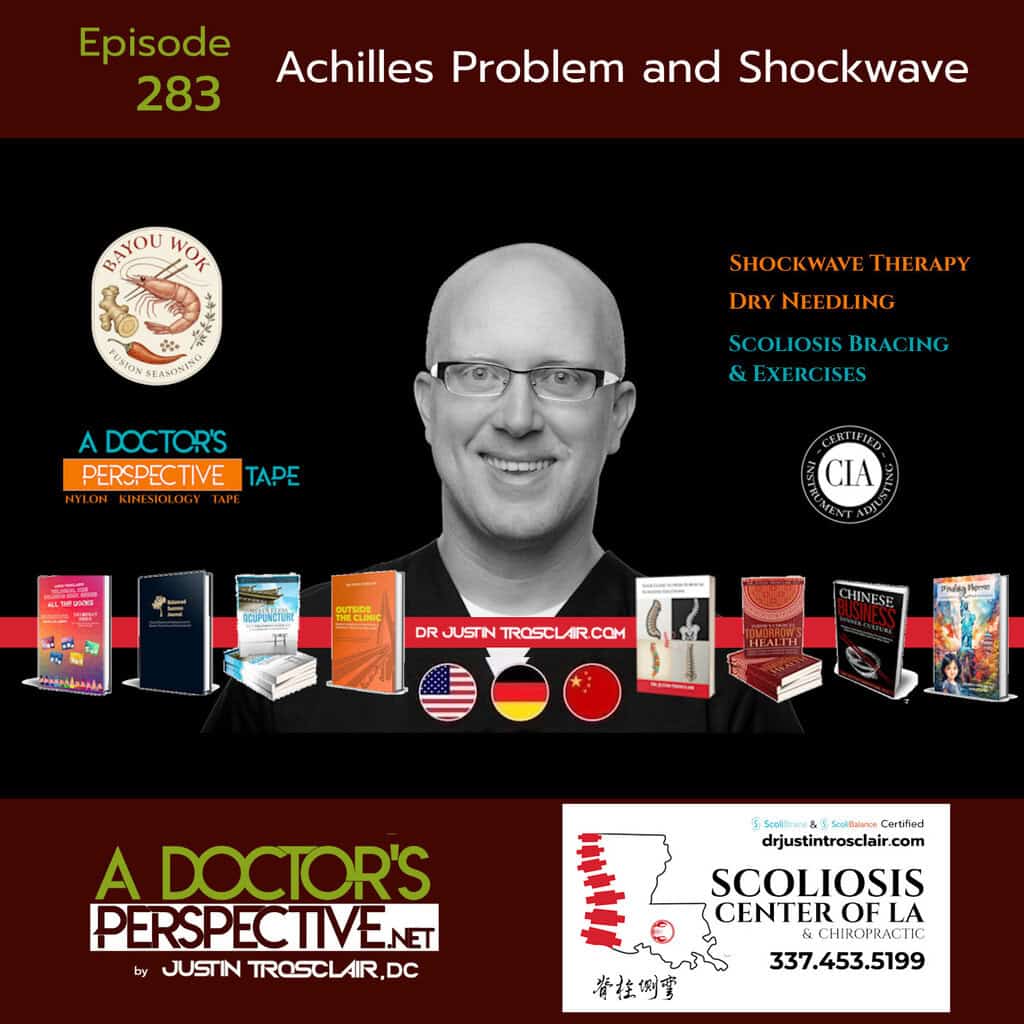
If your Achilles “warms up” after a few minutes but keeps coming back, this episode explains why rest alone often fails—and how shockwave therapy plus the right loading plan can help you finally turn the corner.
Episode Summary
Does your heel feel stiff the first few steps in the morning… then loosen up… then ache again after training? That pattern is common with Achilles tendinopathy—a tendon problem that’s often more about tissue breakdown and slow healing than simple inflammation.
In this episode, you’ll learn what’s really happening inside the tendon, why icing/rest/anti-inflammatories can calm symptoms but not rebuild tissue, and why shockwave therapy has become a strong option for stubborn cases—especially when you’ve already tried the basics without lasting relief.
Read the companion article here:
https://drjustintrosclair.com/the-achilles-problem-that-rest-alone-wont-fix
What You’ll Learn
You’ll walk away knowing:
- The difference between “tendinitis” and tendinopathy
- Why Achilles pain often improves during movement… then returns later
- Why rest can reduce pain but still not fix the tendon long-term
- What shockwave therapy is (and what it isn’t)
- The difference between mid-portion vs insertional Achilles tendinopathy (and why it matters)
- A simple 3-step path to get back to running, hiking, work, and life
Key Takeaways (Quick Wins)
Most chronic Achilles pain isn’t just inflammation—it’s a tendon that needs the right signal to remodel. Shockwave can help restart the healing response, but the long-term win comes from pairing it with a smart, progressive reload plan so the tendon gets strong again without constant flare-ups.
Episode Timeline (Timestamps you can adjust)
The “morning stiffness” story you might recognize
What Achilles tendinopathy really is
Why “rest only” often becomes months of frustration
The big misconception: inflammation vs tissue change
Why the Achilles heals slowly (blood supply matters)
What shockwave therapy does inside the tendon
Who shockwave helps most (and realistic expectations)
Mid-portion vs insertional: two common types
What a typical shockwave plan looks like (3–5 sessions)
The 3-step plan: assess → shockwave (if fit) → reload
Next steps / scheduling info
Who This Episode Is For
This is for you if:
- Your Achilles is stiff in the morning or after sitting
- You feel better after warming up, but pain returns later
- You’ve tried stretching, icing, rest, shoe changes, or “taking time off” and it keeps coming back
- You want to avoid injections or surgery (if possible)
If you’re in Lafayette, Louisiana and Achilles pain has been limiting your activity—and standard conservative care hasn’t delivered lasting relief—call or text 337-453-5199 to schedule a consultation. We’ll help you figure out what type of Achilles issue you have and whether shockwave therapy is the right next step.
Resource Mentioned
Companion article: https://drjustintrosclair.com/the-achilles-problem-that-rest-alone-wont-fix