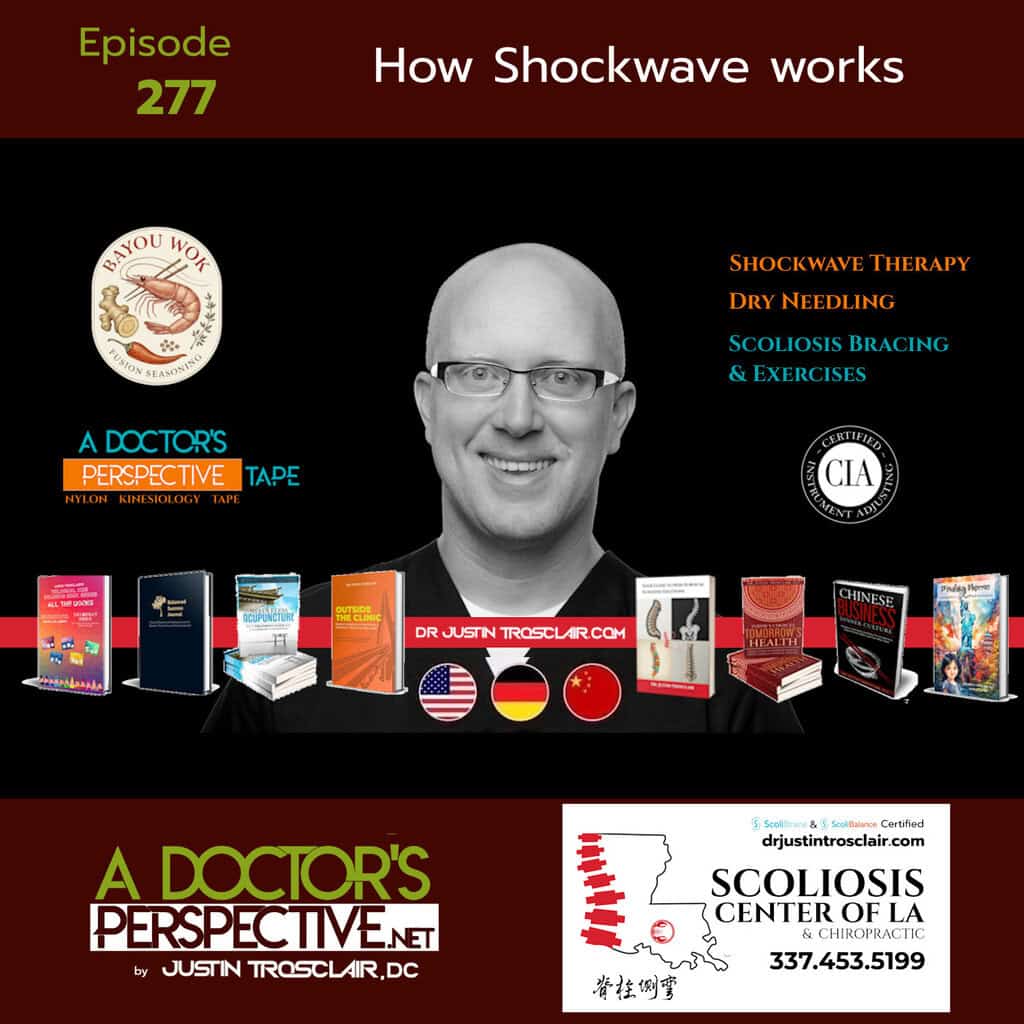
If you have chronic pain or a stubborn injury that won’t heal, this episode explains a treatment option that can help your body restart the healing process: shockwave therapy. We cover what it is, how it works, what conditions it helps, what results to expect, and how to know if you’re a good fit.
This is a “plain English” episode designed to help you stop guessing and start making a smart next step.
Who this episode is for
This episode is for you if you’ve tried rest, stretching, physical therapy, meds, or home tools and your pain keeps coming back—especially with heel pain, Achilles pain, elbow pain, shoulder pain, knee pain, hip pain, or tendon injuries.
Key takeaways
Shockwave therapy is non-surgical and non-invasive, meaning no injections and no downtime like surgery. It uses sound-wave pulses to increase blood flow, break up painful scar tissue, and stimulate your body’s natural repair process. It can also support collagen production, which helps tendons and soft tissues get stronger over time. Many people start noticing improvement after a few sessions, but the goal is steady progress and longer-lasting relief.
What is shockwave therapy (simple definition)
Shockwave therapy uses high-energy sound-wave pulses sent into the injured area. Those pulses create small, controlled “micro-stimulations” that tell your body: “Focus healing right here.”
How it works (what’s happening inside your body)
The pulses travel through the skin to the sore tissue. This can increase blood circulation, bring oxygen and nutrients to the area, help break up scar tissue that causes stiffness, stimulate a healing response, and support collagen production.
Conditions discussed in this episode
Shockwave therapy is commonly used for:
- Plantar fasciitis (heel pain)
- Achilles tendinitis / Achilles tendon pain
- Tennis elbow or golfer’s elbow
- Shoulder pain (including some rotator cuff-related problems)
- Chronic joint pain
- Hip pain
- Tendon injuries that are slow to calm down
What to expect
The first step is a thorough evaluation to confirm the real source of your pain and whether shockwave is the right tool. If you’re a good fit, a plan is created for your condition, and most people complete treatment across a small number of sessions.
FAQ
Is shockwave therapy invasive? No. It’s non-invasive and does not require injections.
How many sessions do people need? Many people feel improvement after a few sessions, but the exact plan depends on the condition and how long it’s been going on.
Is it only for athletes? No. Athletes use it, but it’s also for regular people who just want to walk, work, and live with less pain.
What if I’ve tried everything already? That’s a common reason people look into shockwave—especially for chronic tendon or heel pain that doesn’t respond to the basics.
Next step
If you’re ready to stop living with pain and want to see if shockwave therapy is right for you, schedule a visit.
Call or text: 337-453-5199
Full Article: drjustintrosclair.com